
CTで輪切りにされて四面体にされる Stanford Bunny
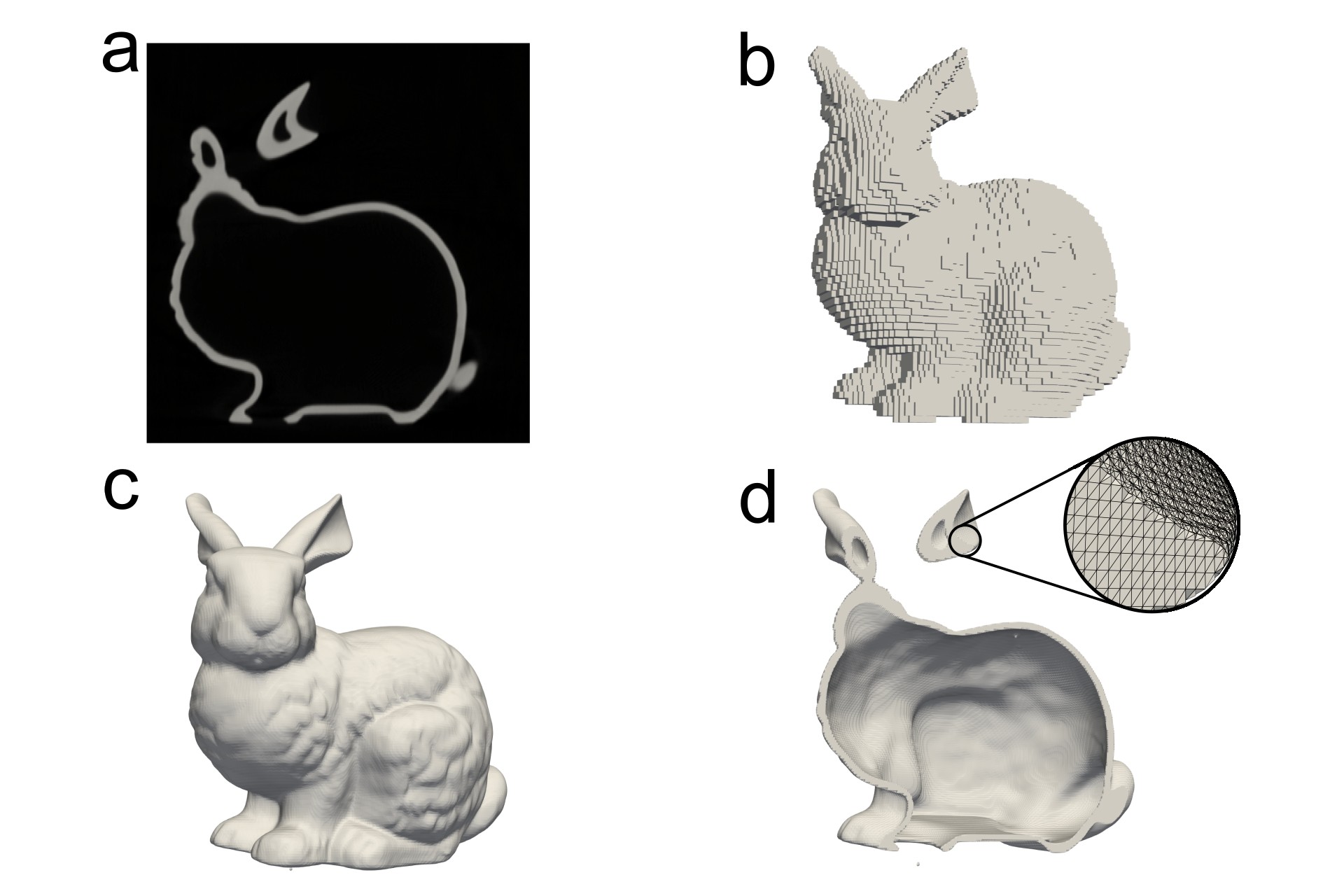
CT撮影されたStanford Bunnyの画像から、voxel・surface・tetrahedral meshを生成する例です。MyMesh論文のFigure 2を改変せず転載しています。
図の出典: Timothy O. Josephson, Elise F. Morgan, “MyMesh: General purpose, implicit, and image-based meshing in Python”, Figure 2, JOSS 11(122), 10003 (2026)。著作権は著者に帰属し、Creative Commons Attribution 4.0 International(CC BY 4.0)の下で公開されています。著者公開の画像を無改変で使用しています。

元データ: Stanford University Computer Graphics Laboratory。CTデータの提供元はTerry Yoo(National Library of Medicine)で、Stanford RadiologyのSandy Napel・Geoff RubinとStanford CSのMarc Levoyが協力しています。
今回のStanford bunny
今回のStanford bunnyは、表面scanではなくCT volumeを入力としてvoxel mesh、surface mesh、tetrahedral meshへ変換する例に使われています。
MyMeshはPythonでgeneral-purpose meshingを扱うlibraryで、image data、implicit function、surface geometryなど複数の入口を持ちます。CT volumeから内部を含む3次元meshを構成できることを、複雑な形状で示しています。
さらにsurface meshのcoarsening例では、約504k trianglesから約15.5k trianglesまで減らしています。今回は輪切り画像から再構成されたあと、表面だけでなく内部まで四面体にされます。
今回の扱い:CT volumeからvoxel・surface・tetrahedral meshへ変換され、surfaceもcoarseningされる
状態:その他(mesh representationを複数生成)
論文の内容
Pythonでmeshing pipelineを統一する
mesh generationには入力形式ごとに異なるtoolが必要になる場合があります。MyMeshはimplicit geometry、surface mesh、image volumeなどを共通のPython interfaceから扱うことを狙います。
用途はfinite element preprocessing、geometry processing、image-based modelingなどです。
Image-based meshing
segmented volumeからvoxel representationを作り、boundaryを抽出してsurface meshへ変換できます。さらにvolume内部へtetrahedral elementを生成し、解析向けmeshへ進められます。
medical / CT系のimage dataとengineering meshを同じpipelineで扱える点が特徴です。
Surface processing
surface smoothing、repair、coarseningなどの処理も含みます。高密度meshをそのまま使うのではなく、geometry detailとelement数のbalanceを調整できます。
評価例では約504,000 triangleのsurfaceを約15,500 triangleまでcoarseningしています。
Implicit geometry
imageだけでなくimplicit functionからcontour / surfaceを作る機能も持ちます。TPMSのような数式定義geometryのmeshingにも利用できます。
制約
自動meshingでもelement qualityは入力geometry、resolution、parameterに依存します。解析用途では生成後にaspect ratio、Jacobian、boundary fidelityなどを確認する必要があります。
論文情報
MyMesh: General purpose, implicit, and image-based meshing in Python
Timothy O. Josephson, Elise F. Morgan
- Published: 2026年6月1日
- JOSS 11(122), 10003
- DOI: https://doi.org/10.21105/joss.10003
- 分野: Meshing / Scientific Computing / Python
- 使用モデル: Stanford bunny
- 使用箇所: Figures 2・3
- surface coarsening: 約504k → 15.5k triangles
- 用途: CT image-based voxel / surface / tetrahedral meshing